 |
Benjamin FoxPosition/Title: PhD student email: bfox03@uoguelph.ca Phone: Office: ANNU 229
|


Hi, I’m Ben!
My interest in animal nutrition stems from a passion for understanding how nutrition can influence health, performance, and overall well-being. Having always been involved in athletics, I have developed a strong appreciation for the relationship between dietary intake, physical performance, and recovery. This interest has extended into my academic career, where I have become particularly fascinated by the nutritional requirements of working dogs and how dietary strategies can support their ability to perform under physically and environmentally demanding conditions. I believe that advancing our understanding of nutrition in working canines is essential to improving their health, athletic performance, and longevity. Through my research, I hope to contribute meaningful knowledge to the scientific community while helping bridge the gap between academic research and practical feeding strategies for working and sporting dogs.
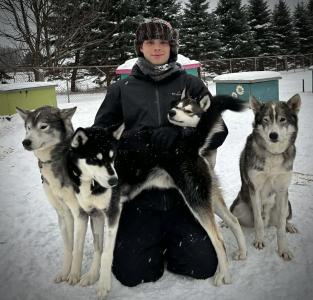
I am currently a PhD student at the University of Guelph under the supervision of Dr. Anna Kate Shoveller, where my research focuses on the effects of dietary yeast supplementation on physiological stress responses and gastrointestinal health in exercising Siberian Huskies. My work investigates how yeast-derived bioactive compounds may influence physiological adaptations, intestinal integrity, nutrient utilization, and gastrointestinal function in dogs exposed to different forms of stress. More specifically, I am interested in understanding whether nutritional interventions can improve resilience to exercise- and heat-induced stress, ultimately supporting the health and performance of working canines.
My initial research project involved a controlled feeding trial with 24 Siberian Huskies undergoing a structured exercise program during the winter months. Dogs were assigned to either a control diet or a diet supplemented with yeast autolysate at 100 mg/kg body weight. Throughout the study, we evaluated several physiological and gastrointestinal parameters, including heart rate, respiratory rate, rectal temperature, body composition, fecal quality, and products of microbial fermentation. These measurements allowed us to investigate the effects of supplementation on physiological responses to exercise, alongside changes in gastrointestinal function during a period of sustained physical activity. Through this work, I have gained valuable experience in animal research, laboratory techniques, and analytical approaches used to better understand canine metabolism and nutritional physiology.
Building upon this research, my subsequent work investigates the effects of yeast autolysate supplementation on Siberian Huskies exposed to elevated ambient temperatures during the summer months. This project explores the potential benefits of dietary yeast supplementation at varying inclusion levels, with a particular focus on thermoregulation, intestinal barrier integrity, nutrient utilization, and gastrointestinal health. To better understand these relationships, we assess physiological responses such as heart rate, respiratory rate, and core body temperature, alongside measures of intestinal permeability, circulating metabolites, fecal fermentation products, and the gut microbiome. By investigating these outcomes together, I hope to better understand the mechanisms through which dietary supplementation may influence the ability of working dogs to tolerate environmental stressors.
Outside of academia, I enjoy lifting weights, cooking, and playing sports. I also value spending time with friends and family, and maintaining an active lifestyle. I look forward to continuing my academic development and contributing research that can positively impact the lives of working dogs and the people who care for them!